
- News
- City News
- mumbai News
- ‘And one man in his life plays many parts’
Trending
This story is from March 27, 2021
‘And one man in his life plays many parts’
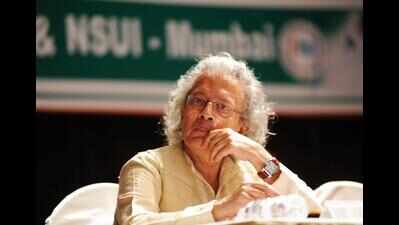
Anil Dharker straddled many worlds. He rose to the multiple peaks of media. Editor and columnist. He was telegenic with his articulate grasp of many matters, and no less his maestro locks
For, Anil straddled many worlds. Least of all the one for which he was professionally trained: engineering.

He had more than the dilettante’s knowledge of the arts especially music, as borne out by his close association with the NCPA—and his deep-drill interview with Zubin Mehta. He briefly headed the National Film Development Corporation.
Additionally, Tata’s R Gopalkrishnan mourned the loss of his tennis partner of 30 years. Anil was a single malt aficionado; briefly even launched his signature line of long kurtas. And he was a fully paid-up member of Mumbai’s salon society.
All these coalesced in what Anil Dharker came to be known best for: Tata Litlive. He put everything he had into forging it into a tour de force—and ultimately it drained life out of him. The heart is a ruthless mistress.
Litfests also took a toll of our near 50-year-friendship. Anil was convinced that I was responsible for the Times of India pulling out of Litlive and starting its own litfest with me at the helm. I had no such clout, and even less inclination. I was a reluctant stopgap, who ultimately didn’t stop. But I do hope that my valued friend hasn’t carried this baseless grudge to his grave. It would deepen my sorrow over his loss.
For, I have known Anil over ‘mornings, evenings, afternoons’. I remember when the Dharkers flashed into the Bombay orbit in the early ’70s. Khushwant Singh, my first boss, wrote about them in the Illustrated Weekly, totally taken up by this beautiful couple fresh from London. For him, it had the edgy cachet of being an Indo-Pak marriage, though in truth Imtiaz was Glasgow-raised.
Anil suave; she, the sensitive poet and artist—they seamlessly merged into that galaxy of advertising/theatre wallas, literary enfants terribles, editors bound by liberal thought and urban consciousness. The Dharkers’ parties were coveted for the quality of their conversations—and Imtiaz’s roast lamb with rosemary potatoes. Their daughter Ayesha would craft her own artistic success as a stage actor in London, and the doting Anil always said only half in jest, that he was the least talented of the family.
But fate is no respecter of charmed lives. The Dharkers parted ways. Amy, who too had been my friend (and colleague) for almost as long, came into Anil’s life. Theirs has been a great mutual devotion. Imtiaz is happily ensconced amidst London’s cultural haute monde; she refused poet laureate-ship because she wanted to retain her creative independence.
Ours is not to question why relationships realign. We can only try not to let any twists turn the screws on friendships and loyalties. Rest assured, dear Anil.

About the Author
Bachi KarkariaEnd of Article
FOLLOW US ON SOCIAL MEDIA





Hot Picks
TOP TRENDING
Trending Stories
In City
Entire Website
- Malaika Arora's father Anil Arora dies by suicide in Mumbai
- 7 Key Reasons Why UPSC is the Toughest Exam in India
- 9/11 Remembrance Day: Key moments from the deadliest attack on US
- Howard University: 10 landmark firsts of the institution that shaped Kamala Harris
- Earthquake of magnitude 5.8 strikes Pakistan, tremors felt in Delhi, neighbouring areas
- Who were Barack Obama's challengers in 2008 and 2012 US presidential elections?
- 'A in INDIA alliance': Rahul Gandhi's slip-up during address to Indian-Americans goes viral
- Trump vs Harris: Betting markets reveal who’s expected to win the US presidential debate
- IGNOU December 2024 Term-End Exam: Registration Details, Important Dates, and Fee Structure
- Top 10 TED Talks to Boost Confidence and Success for Female Students
- 200 deaths/day, $1.5tn per year: How China is destroying US with fentanyl
- Harris emerges unscathed from debate, dancing around her flip-flops
- iPhone success shows India can beat China to become world's factory
- Communal violence erupts in Karnataka during Ganesha idol immersion
- After Kolkata docs set new demands, Mamata govt says 'not ready to accept'
- Omar fighting for chair, I’m fighting for people of Kashmir: Er Rashid
- Why Kolkata rape-murder victim’s mother accusing Mamata of lying?
- Apple iPhone 16 vs iPhone 15: Which iPhone to buy and why
- Biryani row: Administration moves boy to new school, to waive Rs 37k in fees
- 2013 Patna serial blasts: HC cuts death to 30 years in jail for 4

Popular Categories
Hot on the Web
Top Trends
Trending Topics
Deepika PadukoneMalaika Arora Father DeathArbaaz KhanJayram RaviAishwarya Rai BachchanSlat WaterWeight GainGOAT CollectionVikas Sethi DeathMalayalam ProducersIndia's Best Dancer 4Simi GarewalDilli BabuIndian National ParksLaung BenefitsVikas SethiiPhone 16Dubai Princess Sheikha MahraMG Windsor EvWordle Answer
Living and entertainment
Latest News
Jiiva and wife escape with minor injuries after a road accidentThe Zodiac Signs Most Naturally Inclined to HealingWhy Banyan trees survive for centuries and spread indefinitely?Telangana government pushes for increased flood relief from CentreWalking dog in Goa? Mouth guard, leash soon to be mustNBA 2K25 locker codes September 2024: Locker codes revealed and know how to reveal themDonald Trump and Kamala Harris shake hands as they meet for first time on debate stage: Watch the 'awkward' momentBRS pushes for disqualification of turncoat MLAs after High Court rulingKamala may have won debate. But election is still too close to callCommunal violence erupts in Karnataka during Ganpati Visarjan, section 144 imposedVarun Dhawan shares unfiltered reaction to Janhvi Kapoor's 'Daavudi' song from 'Devara: Part 1': 'So freaking good...''On basis of fairness and equality': Bangladesh seeks good relations with India, says YunusMpox kills two, six other confirmed cases in Cameroon: GovernmentJalen Ramsey demands action against Miami Police following Tyreek Hill's pulled from car49ers RB Christian McCaffrey misses win over JetsWWE Superstar Blames the Company for Failing to Utilize Omos’ Potential7 Common veggies that are loaded with iron and essential nutrientsAir India Express and Scoot launch exciting flight sale for domestic and international travel
Copyright © 2024 Bennett, Coleman & Co. Ltd. All rights reserved. For reprint rights: Times Syndication Service